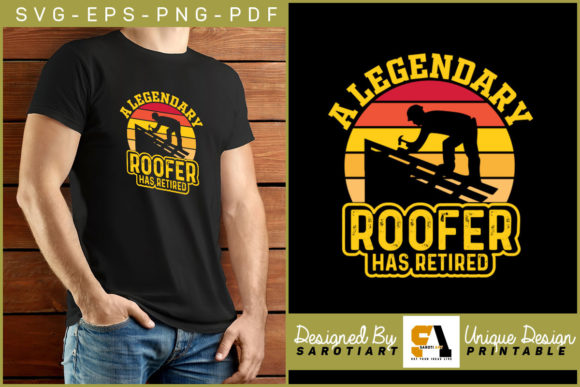
A Legendary Roofer Has Retired Retro SVG Review
When I first opened the file for A Legendary Roofer Has Retired Retro SVG, my initial reaction wasn't just about the text; it was about the vibe. As someone who spends hours tweaking stitch densities and choosing thread colors for client projects, I look for designs that tell a story immediately. This piece hits that mark with a distinct retro personality that feels both nostalgic and celebratory. It isn't just a generic "retire" graphic; it carries the weight of a career well-lived, specifically tailored for those who have spent their days working at heights.
The visual layout is clean enough to translate well into stitching but detailed enough to hold attention on a finished product. The typography has that classic, slightly weathered look that suggests durability—a fitting theme for a roofer. For a designer looking to add this to their portfolio of embroidery files, the first impression is promising. It strikes a balance between professional recognition and personal sentiment, making it an excellent candidate for custom apparel or a heartfelt personalized gift.
Real-World Application: From Digital File to Finished Product
Let's talk about how this design actually behaves when it leaves the screen and hits the hoop. I recently considered using A Legendary Roofer Has Retired Retro SVG for a specific project: a custom embroidered tote bag for a retiring contractor friend who also runs a small home improvement business. The goal was to create something he could use for his weekend hobby projects while subtly signaling his new status as a legend in retirement.
In practice, the design's structure works beautifully for a tote bag. The central placement allows for a balanced composition that doesn't get lost in the canvas texture. However, the success of the final product depends heavily on your choice of materials. If you are aiming for a boutique feel, pairing this with a heavy-duty cotton canvas and high-quality polyester threads will elevate the piece significantly. The retro aesthetic pairs particularly well with earthy tones like denim blue, forest green, or a deep charcoal, which complements the rugged nature of the roofing trade.
I also ran a mental simulation for a sweatshirt application. Here, the design would shine as a chest pocket embroidery or a large back print. The bold lettering ensures readability even from a distance, which is crucial for commercial embroidery items sold at craft fairs or online shops. Customers browsing Etsy listings often judge a product by its mockup, and a clear, well-stitched version of A Legendary Roofer Has Retired Retro SVG can instantly convey quality and thoughtfulness. It transforms a standard garment into a keepsake that honors a specific profession.
Navigating Stitch Density and Fabric Challenges
While the concept is strong, every machine embroidery design has its pitfalls, and understanding them is key to a successful outcome. One area where designers need to be cautious is the density of the fill stitches within the retro elements. If the original file has dense areas, running it on thin fabric or stretchy knit materials without proper support can lead to puckering or distortion. When evaluating this design for a baby item or a lightweight tee, I would recommend reducing the stitch count or adding a tear-away stabilizer to ensure the fabric remains smooth.
Another critical factor is the hoop size. If you attempt to stitch this on a curved surface like a cap, the curvature might compress the details, causing the text to lose its crispness. For a tote bag design or a flat pillow cover, the stability is much higher. I also advise paying close attention to the smaller decorative accents. In some retro styles, tiny lines or dots can get lost if the thread color contrast isn't perfect. Testing the design in black and white mockups before cutting any fabric is a smart move to verify legibility.
For those considering this for embroidered patches, the outline definition is vital. If the border is too thin, the edges might fray over time, especially on items that see frequent washing. A robust satin stitch border would help lock down the edges and give the patch a professional finish suitable for small shop products. Conversely, if the design includes intricate curves, ensure your machine can handle the turn rate without skipping stitches, which can happen on complex paths.
Maximizing Visual Appeal and Customer Trust
The ultimate goal of any craft business owner is to build trust through presentation. A well-executed A Legendary Roofer Has Retired Retro SVG does more than just decorate fabric; it validates the recipient's career. When a customer receives a hoodie or apron featuring this design, the clarity of the stitching speaks volumes about the maker's skill. Blurry text or uneven fills can undermine the sentiment, whereas crisp, consistent stitches reinforce the idea of a premium, handmade product.
This design also offers versatility for seasonal marketing. Imagine using it for Father's Day gifts, end-of-year bonuses for construction crews, or holiday presents for grandparents who used to work in trades. The retro style fits seamlessly into these contexts, offering a timeless look that avoids feeling dated quickly. For Etsy sellers, creating printable mockups that show this design on various backgrounds—like a workshop wall, a garage door, or a cozy living room—can significantly boost buyer engagement.
Essential Notes for the Embroidery Designer
Before you hit the start button on your machine, there are several practical steps to ensure your finished product meets professional standards. First and foremost, always test the design on scrap fabric. This simple step reveals potential issues with tension, thread breaks, or stabilizer needs that aren't visible on a computer screen.
You must also verify the thread color contrast. A dark design on a dark background requires a different approach than a light design on a dark background. Check whether the design includes underlay stitches that will provide a solid base for the top layers. If the file lacks sufficient underlay, the satin stitches might sink into the fabric, ruining the retro aesthetic. Additionally, confirm the licensing terms provided by Sarotiart. Are you allowed to sell finished items? Is there a limit on the number of units? These details are crucial for avoiding legal issues in your digital product sales or physical merchandise line.
If you are working with textured fabrics like fleece or terry cloth, you may need to adjust your needle type or increase the hooping pressure to prevent shifting. Always inspect the small details after stitching; sometimes, what looks good on screen appears crowded in real life. Comparing light and dark fabric backgrounds during your testing phase will help you decide which combinations yield the best results for your specific audience.
Finally, consider the longevity of the item. For products that require frequent washing, such as kitchen towels or work aprons, ensure the stitch density is high enough to withstand friction but not so high that it damages the fabric fibers. By taking these precautions, you transform a simple digital download into a reliable asset for your embroidery project workflow.
Ultimately, A Legendary Roofer Has Retired Retro SVG is a thoughtful addition to any collection of design assets. It resonates with a specific community while maintaining broad appeal through its classic styling. Whether you are crafting a one-off gift for a loved one or building a catalog of graphics for your Crafts store, this design offers a solid foundation for creating meaningful, high-quality items that stand the test of time.